SEO vs Google Ads: Which Should Your Business Invest In First?
SEO vs Google Ads: Which Should Your Business Invest In First?
Choosing where to spend your digital marketing budget—SEO or Google Ads—is a strategic decision that shapes visibility, lead flow, and growth. Both channels deliver value, but they work differently. This guide walks through how each performs, the pros and cons, and how to choose the right first step for your goals and budget.
Understanding SEO and Google Ads
Before allocating budget, it helps to know exactly what SEO and Google Ads do and how they fit into a broader marketing mix.
What Is SEO?
Search Engine Optimization (SEO) is the set of practices that improve your site’s placement in organic search results. That includes keyword research, on-page optimization, content strategy, link building, and technical fixes. The objective is to rank higher for relevant searches and attract steady, long-term traffic without paying for clicks.
What Are Google Ads?
Google Ads is a paid advertising platform that places your ads in Google search results and across its network. Advertisers bid on keywords so their ads appear for relevant queries. Google Ads gives immediate visibility and precise targeting (demographics, location, device), and you typically pay only when someone clicks your ad.
Key Differences Between SEO and Google Ads
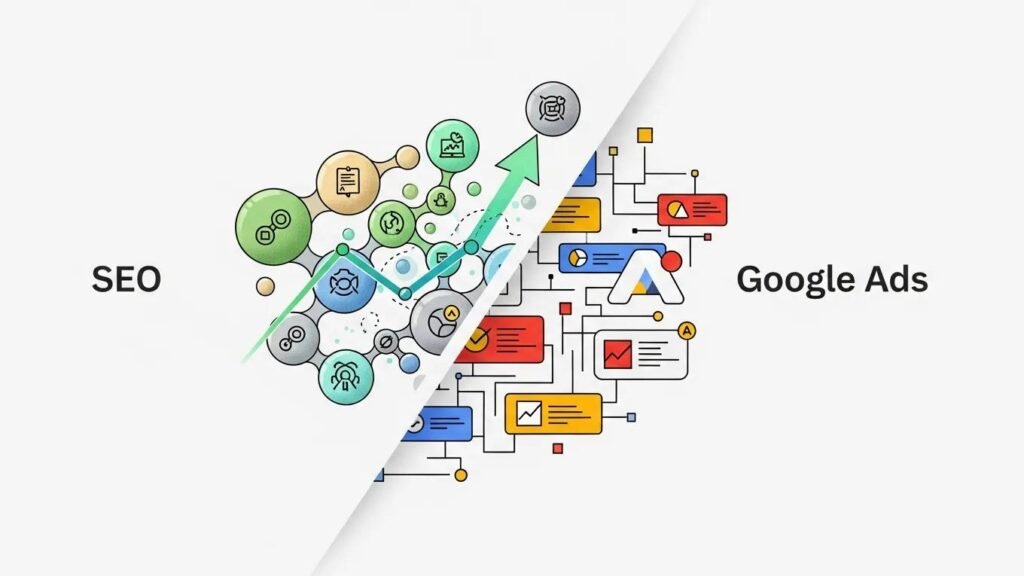
Both channels aim to increase traffic and conversions, but they differ in timing, cost structure, and control.
| Aspect | SEO | Google Ads |
|---|---|---|
| Cost | Upfront and ongoing investment in content and optimization; typically lower long-term cost | Pay-per-click model; costs vary with competition and can rise quickly |
| Time to Results | Builds over weeks to months before showing meaningful results | Provides immediate visibility as soon as campaigns launch |
| Sustainability | Can deliver durable results with ongoing maintenance | Traffic stops when budget stops |
| Click-Through Rate (CTR) | Often higher thanks to organic trust and relevance | Varies by ad creative and competition; can suffer from ad fatigue |
| Control and Targeting | Less granular control over exactly who sees your listing | Highly granular targeting and bidding controls |
Benefits of Investing in SEO First
SEO is often the foundation of a sustainable online presence. Here’s why starting with SEO can pay off:
- Cost-Effectiveness Over Time: Initial investment in content and optimization can produce ongoing organic traffic without continuous ad spend.
- Builds Credibility and Trust: Organic listings are perceived as more authoritative, which can boost engagement and conversions.
- Long-Term Results: Strong SEO can keep you visible for months or years with steady maintenance.
- Improves User Experience: SEO work typically improves site speed, mobile usability, and content clarity—benefits for both users and search engines.
- Competitive Advantage: High organic rankings position your brand as an industry authority and reduce reliance on paid channels.
Advantages of Starting with Google Ads
Google Ads delivers near-instant impact and flexibility, which can be crucial depending on your objectives:
- Immediate Traffic and Leads: Ads can drive visitors and conversions as soon as campaigns go live.
- Precise Targeting: Target by keywords, location, demographics, devices, and schedule to reach the right audience.
- Flexible Budgeting: You control daily spend and can scale or pause campaigns quickly.
- Testing and Data Collection: Ads provide fast insights into which keywords and messages work, informing broader strategy.
- Supports New Businesses: For sites with limited organic presence, paid search can jumpstart visibility and lead flow.
Factors to Consider When Choosing Between SEO and Google Ads
The right choice depends on several business-specific factors. Weigh these when planning your investment.
Business Goals and Timeline
If you need quick leads or sales, Google Ads is the faster route. If your focus is sustainable growth and brand authority, SEO is the better long-term play.
Budget Constraints
Google Ads requires an ongoing ad budget that scales with competition. SEO needs investment in quality content and technical work but often proves more cost-effective over time.
Industry Competition
Highly competitive niches often benefit from both channels: ads for immediate visibility and SEO to build organic traction over time.
Existing Online Presence
If your site already has authority and content, SEO improvements may yield faster returns. Brand-new sites frequently use ads to build initial traffic while SEO gains momentum.
Target Audience Behavior
Study how your audience searches and converts. Some audiences favor organic content; others respond faster to paid solutions. Audience research should guide your mix.
How to Integrate SEO and Google Ads for Maximum Impact
These channels work best together. A blended approach lets you capture immediate demand while building lasting organic visibility.
- Use Google Ads to Test Keywords: Run short ad tests to quickly identify high-converting keywords before committing SEO resources.
- Complement Organic Rankings: Bid on competitive terms with ads while growing organic presence for related, long-tail queries.
- Retarget Visitors: Retarget organic visitors with ads to bring them back and increase conversion chances.
- Seasonal Campaigns: Use ads for time-sensitive promotions while maintaining SEO for evergreen content.
- Data-Driven Decisions: Combine insights from both channels to refine messaging, landing pages, and targeting.
Measuring Success: Metrics to Track for SEO and Google Ads
Track channel-specific KPIs to judge effectiveness and optimize investment.
SEO Metrics
- Organic Traffic: Visitors coming from search engines.
- Keyword Rankings: Placement of target keywords in search results.
- Bounce Rate: Share of visitors who leave without interacting.
- Conversion Rate: Percentage of visitors completing desired actions.
- Backlinks: Number and quality of external sites linking to you.
Google Ads Metrics
- Click-Through Rate (CTR): Clicks divided by impressions, showing ad relevance.
- Cost Per Click (CPC): Average cost for each ad click.
- Quality Score: Google’s assessment of ad relevance and landing page quality.
- Conversion Rate: Percentage of ad clicks that convert.
- Return on Ad Spend (ROAS): Revenue generated per dollar spent on ads.
Common Mistakes to Avoid When Choosing Between SEO and Google Ads
- Ignoring Your Audience: Not understanding search intent leads to wasted spend and low-impact content.
- Neglecting Mobile Optimization: Both channels underperform if the site isn’t mobile-friendly.
- Overlooking Analytics: Failing to track and analyze data prevents effective optimization.
- Expecting Instant SEO Results: SEO takes time—plan for a multi-month horizon.
- Setting and Forgetting Ads: Paid campaigns require ongoing testing and optimization to remain efficient.
Frequently Asked Questions
1. How do I determine the right balance between SEO and Google Ads for my business?
Start with your goals, timeline, and budget. Use Google Ads when you need immediate traffic or to validate keywords. Invest in SEO when you want sustainable, lower-cost acquisition over time. Many businesses use a hybrid approach—ads for immediate results and SEO for long-term growth—adjusting the mix based on performance data.
2. Can I use SEO and Google Ads simultaneously?
Yes. Running both together captures immediate demand while you build organic authority. Ads can test keywords and messaging quickly; those insights inform your SEO and content strategy. Plus, retargeting paid visitors can improve overall conversion rates.
3. What are the common pitfalls to avoid when investing in SEO?
Avoid skipping keyword research, ignoring mobile users, and underinvesting in quality content and link building. Also, be realistic about timelines—SEO is a long game, and impatience can lead to poor decisions.
4. How can I measure the success of my Google Ads campaigns?
Track CTR to gauge ad relevance, CPC to manage costs, and Conversion Rate to see how well clicks turn into actions. Evaluate ROAS to understand profitability and use Quality Score to diagnose issues with ad relevance or landing pages.
5. What role does audience behavior play in choosing between SEO and Google Ads?
Audience search habits and intent determine channel effectiveness. If prospects research extensively before buying, SEO and content will pay off. If they seek immediate solutions, paid ads can capture that demand. Use audience research to align channel strategy with behavior.
6. How often should I update my SEO strategy?
Treat your SEO plan as a living document. Review it at least quarterly, or sooner when industry trends, algorithm updates, or performance data indicate change. Regular audits help keep content relevant and technically sound.
7. What are the long-term benefits of investing in SEO?
SEO builds sustained organic visibility without ongoing ad spend, improves user experience, and strengthens brand credibility. Over time, a solid SEO foundation reduces dependency on paid channels and positions your brand as an authority in your market.
Conclusion: Making the Right Choice for Your Business
Picking between SEO and Google Ads depends on your objectives, budget, timeline, and competitive landscape. Choose Google Ads for fast visibility and immediate lead generation; choose SEO for durable, cost-effective traffic and brand authority. When possible, blend both to leverage short-term gains and long-term growth—then use performance data to refine the balance.
Ready to Boost Your Online Presence?
Whether you prioritize SEO, Google Ads, or a mix of both, experienced guidance accelerates results and reduces wasted spend. We can help you map the right strategy and measure what matters.
Deciding Between SEO and Google Ads: Final Recommendations
Deciding between SEO and Google Ads shapes your digital marketing trajectory. SEO builds sustainable traffic and trust over time, while Google Ads delivers immediate, targeted reach. Align your choice with business priorities—short-term growth, long-term authority, or a balanced approach—and use data to continuously optimize. Explore our resources or contact us to determine the best path for your marketing success.